(Upload on April 8 2026) [ 日本語 | English ]
Mount Usu / Sarobetsu post-mined peatland
From left: Crater basin in 1986 and 2006. Cottongrass / Daylily
HOME > Research > Western Australia > References
|
• Western Australia [ Book | Journal (related to smoke)], Mine , Links , Asstract (note) Keywords: coalfield, seedbank, seed dormancy, smoke-induced seed germination |
|
Main gates to enter Western Australia [ Japanese | English ] |
|
Out of print
|
|
|
|
|
|
|
|
|
| Botany and Ecology | Mine | Smoke |
|---|---|---|
|
Australian National Botanic Garden
List of all Australian plant names [> 7 Mb, need caution] |
Wildflowers of Western Australia by World Botanical Associates MATTISKE Consulting Alcoa [Worldwide], [in Australia] Worsley Alumina Pty Ltd |
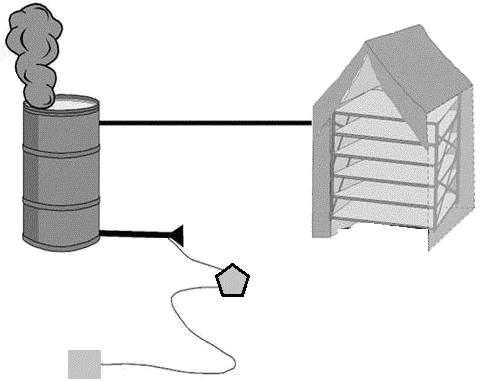
Smoke infused paper Smoke paper (Super Smoke Plus) Liquid smoke |
|
Havel JJ. 1975. Site-vegetation mapping in the northern jarrah forest (Darling Range). 2. Location and mapping of site-vegetation types. Bulletin of Forests Department, Perth, Western Australia 87: 1-105
Location and area: |
Category of habitats, based on species habitat preferences
a. Moist, leached sands |
|
Mullins RG, Koch JM, Ward KS. 2002. Practical method of germination for a key jarrah forest species: Snottygobble (Persoonia longifolia). Ecological Management and Rehabilitation 3: 97-103
Snottygobble (Persoonia longifolia): a key component of the mid-story (< 5 m in height) of the jarrah forest in WA. |
The combination of endocarp chipping and GA3 treatment is effective to promote seed germination, suggesting physical (mechanical) and chemical dormancy
|
Smoke, closely related to seedbankRoche S, Dixon KW, Pate JR. 1997. Seed aging and smoke: partner cues in the amelioration of seed dormancy in selected Australian native species. Australian Journal of Botany 45: 783-815
References
Smoke methods
|
Williams PR, Congdon RA, Grice AG, Clarke PJ. 2003. Fire-related cues break seed dormancy of six legumes of tropical eucalypt savannas in north-eastern Australia. Austral Ecology 28: 507-514
Fire-related cues = heat shock + smoke + nitrate Black carbon (BC, ブラックカーボン)Def. black particulate carbon forming a graphitic (黒鉛) microstructure, produced by incomplete combusion of biomass or fossil, including wildfire= one of the aerosols ⇒ used to estimate wildfire intensity, such as temperatrue and frequencyby the measurements of charcoal, BC and others Particle size related to source and transportation of BC
Elemental carbon, EC (元素状炭素) produced at high temperature ↔ Thermal optical transmittance, TOT (熱光透過)Ref. RT-QuartzBenzene polycarboxylic acids, BPCA (ベンゼンポリカルボン酸)molecular marker of residues, measured by HPLCMellitic acid (B6CA) - reflected by the pyrolysis temperature of BC |
|
Tacey WH, Glossop BL. 1980. Assessment of topsoil handling techniques for rehabilitation of sites mined for bauxite within the Jarrah forest of Western Australia. Journal of Applied Ecology 17: 195-201
Study area: Jarradale minesite on the Darling Plateau
Annual rainfall: 1217 mm (608-2169 mm)
Three treatments on rehabilitation |
Unconfined heap approximately 10 m high for 2 yr was respread at the same average depth after mining Direct whole-return Topsoil was stripped to 40 cm and immediately respread Double-stripping Topsoil which had been stockpiled for 2 yr was spread onto a mined area to a depth of 40 cm and then covered with a 5 cm deep layer which had been freshly removed from the top 5 cm of topsoil of another unmined area |
Liquor Tax Act (酒税法)1871(M 4) Regulations on licensing and taxation for brewing sake, nigorizake and soy sauce
abolished the sakukabu (brewing-share) system = government licensing required for brewers
eliminated myogakin (special levy paid to the shogunate) moving toward a production-based taxation system 1875(M 8): enacted The Liquor Tax Regulations1877 Satsuma Rebellion: liquor tax enforcement 1882(M15) introduced advance payment system for liquor tax
(aimed at stabilizing government revenue) 1891(M24) another tax increase (due to rising fiscal needs)
1894(M27) first Sino-Japanese War → liquor tax revenue established modern framework for categories, tax rates and licensing 1897(M30) established detailed enforcement regulationsstabilized administrative practice 1898(M31)another tax rate revision →
liquor tax approaches the level of land tax revenue becoming Japan largest national tax revenue source 1900(M33) beer taxation introduced - diversified liquor tax systemto fund military expansion after the Boxer Rebellion 1901(M34) liquor tax ≈ 30% of national tax revenue
1904–1905(M37–38) tax increase to finance Russo-Japanese War liquor tax revenue surges |
1918(T 7) rice riots lead to shortages of sake-brewing rice government tightens control 1919(T 8) beer tax raised as urban beer consumption grows1920(T 9) liquor tax becomes the largest national tax revenue source
1923(T 12) Great Kantō Earthquake - devastating breweries
liquor tax increased for reconstruction 1927(S 2) financial crisis → reduced alcohol consumption
tax enforcement tightened
increased major liquor tax to fund the war
alcohol production is fully state-controlled
typically containing about 40% alcohol by volume
minimum three years of maturation in oak casks Scotch (スコッチ): made in Scotland, usually from malted barley
must be aged at least three years in oak barrels
must be aged at least three years in wood Bourbon (バーボン): made in US, from at least 51% corn
must be aged in new, charred oak barrels Fruit wine (果実酒)Def. (legal definition by Liquor Tax Act) =falling under the category of kajitsushu (果実酒), defined as:
alcoholic beverages made by fermenting fruit, not just grapes |