
(Upload on September 25 2026) [ 日本語 | English ]
Mount Usu / Sarobetsu post-mined peatland
From left: Crater basin in 1986 and 2006. Cottongrass / Daylily
HOME > Lecture catalog / Research summary > Glossary > Stress
In the case of animal physiologyCannon, Walter B (1871-1945, physiologist)
firstly proposed stress for medical term activation of the sympathetic nervous system + adrenal medulla Def. (Cannon) stress = the physiological mobilization that occurs when the organism faces a threat
stress = response (≠ stressor)
stress = the nonspecific response of the body to any demand to clearly distinguish the stimulus (the stressor) from the response (stress)
1936 a theory of stress (ストレス学説提唱), or general adaptation syndrome (汎適応症候群, GAS)
Def. (Selye) stress: any external factor, biotic or abiotic, that disrupts an optimal metabolic balance, leading to physiological changes that may impair growth, development or survival
assumption = nonspecificity, i.e., any stimulus produces essentially the same physiological response - criticized ⇒
= stimulus‑based approaches
SRRS: cannot capture individual differences in response to the same event Def. (Holmes & Rahe) stress: essentially the amount of life events a person experienced, with the magnitude of those events assumed to determine the level of stress Lazarus (1966, 1984): introduced the concept of cognitive appraisal (認知的評価)
What determines stress is not the stimulus itself but how the individual evaluates that stimulus, through primary and secondary appraisal Def. (Lazarus): a transaction between the person and the environment |
Cognition alone cannot explain the cumulative physiological damage caused by chronic stress - criticized ⇒
→ allostatic load (アロスタシス負荷) Def. allostatic load: the cumulative physiological burden imposed on the body by repeated or chronic stress Def. stress: an integrated system involving the brain, the body, psychological processes and social factors Applied to plant physiologyStressThe term, stress, originated from physics (mechanics of materials). In Japanese,we say it o-ryoku (応力) nowThen, animal physiology (Cannon) used stress, as shown above
⇒ plant physiology started to use the term, stress, to express stressor
Advanced: ABA/JA/SA/Ca2+/ROS, gene regulatory networks, epigenetic stress memory (ストレス記憶)

 Trade-offs between stress tolerance and competitive ability (Toll 2022)
→ habitat partitioning |
Chilling injury (冷害)any damages to plants caused by temperatures above the freezing point (0°C)Freezing injury (凍害)freeze damage occurs during an advection freezefrost damage occurs during a radiation freeze these two injuries are closely related → the formation of ice crystals in plant tissues, dehydrating cells and disrupting membranesSnow injury (雪害)Relationships between broad-leaved trees and coldnessDamages induced by coldness → the migration of broad-leaved trees is limited |
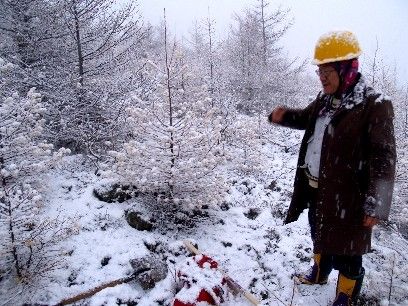
Difficulties in plant establishment in relation to cold tolerance
|
Def. the physiological and molecular stress experienced by plants when water availability is insufficient, leading to reduced water potential, impaired cellular functions and activation of drought‑responsive signaling pathwaysFactors causing drought stressDecrease in soil moistureIncrease in transpiration Limited access to water by roots Decrease in plant water potential (ψ) Impaired water transport due to increased xylem tension Physiological changesStomatal closureReduction in photosynthesis Loss of turgor Metabolic reprogramming Rapid increase in ABA levels (remarkable) |
Def. Resurrection plant (復活草): any of desert plants, especially spike mosses of the genus Selaginella, that curl up when dry and spread their branches or turn green again when watered Resurrection plant (US) = Selaginella lepidophylla (s.s.) Rose of Jericho = Anastatica hierochuntica (true), Selaginella lepidophylla (false)
A small Asian desert plant that dries into a tight ball and expands when moistened
A fern shriveling during drought and becoming green again after rain AdaptationEx. Cacti, tamorugo tree (Prosopis tamarugo) (Tributsch 1984)
Distribution: Atacama Desert, Chile - Annual precipitation = 13 mm |
|
Def. the negative impact of increased salinity on the plants (or organisms) establishing in an environment Def. Viviparous seed (胎生種子): germinating while still attached to the parent plant Ex. mangrove trees |
Halophytes (塩生植物): plants that tolerate or thrive in salty conditions, i.e., salt tolerant plants Salt damage (塩害): |
| 1. physiological tolerance 2. morphological tolerance (resistance) |